ACQUIRING COMPETENCIES
Brand Development
Brands are ultimately the collaboration of media designers, the company or organization they are designing for or with, and the target audience or consumer base. Brand development is a process that, through an immense amount of research, ideation, production, and revision, a designer or team of designers hopes to create a living, breathing, tangible, and cohesive collection of media assets rooted in a specific voice that will effectively speak to its target audience. Brand development took the last year of my life to acquire competency within; it is an incredible process that can completely devour your time and energy due to the sheer amount of information required to understand the many aspects that exist within branding and the development of a brand. To start looking at an idea, a design problem with a big picture lens is the way (to borrow from The Mandalorian). It has forever changed my life. In the last year of my professional career, I have already had the fortune of implementing it slowly but surely, consciously and subconsciously.

Copywriting
Copywriting is the foundation of any brand; It is the bedrock in which a brand’s subsequent ideas, images, assets, and communications are rooted. A brand needs to have a specific voice or personality, varying the tone to suit different contexts and situations while staying consistent in its overall messaging or communications to be identifiable to its customers. Understanding the role copywriting plays, the difference between voice and tone, benefits and needs, and practicing was vital in acquiring this competency. This entire course was one that I was possibly the most nervous and excited about simultaneously before starting this program. It was a concept that, before beginning to understand, I was sure I would never need in my life as it was so far removed from the role of a graphic designer. That couldn’t have been further from the truth! It is arguably the most crucial concept learned in the last year, as it has made me a better communicator, and ultimately, design in its most simple form is communication.
Art versus Design
Art and media design are both intentional; it’s just that they have two very different purposes in the world today. Art is intended to be a form of self-expression, often in hopes of connecting or eliciting a unique emotional response from its audience. In contrast, graphic or media design must intentionally communicate a specific feature or benefit to its targeted audience. It relies on a clear message derived from data, facts, and insights that technically has failed if not communicated effectively. It relies on art (for the most part) to be effective; it's a fantastic medium that, similarly to art, pushes the boundaries of technology and mediums and, if successful, can even push the boundaries of its audience and reveal to them knowledge or insights that they did not have previously. This concept required the past year of my life to understand; I am an artist and have even had minor success in exhibiting my work and selling fine art to patrons. I know now that the design process is not about me; it’s not about my feelings or emotions; truly, great design has to be rooted in logic obtained through critical thinking and application, through clear and concise design decisions that can be rationalized.

Elements of Visual Design
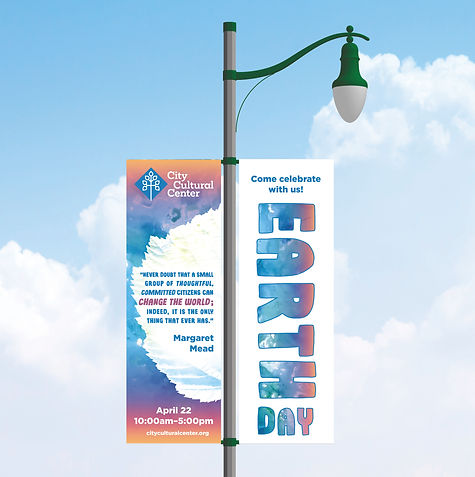
The seven visual design elements - shape, color, space, form, line, value, and texture - are essential to understand and use. They help communicate quickly and clearly with the target audience. On top of extensive research, it took much experimentation with these elements throughout the program to understand how they function to create a balanced design. The concept can always be addressed and revisited as needed; it is vital to continually expand my knowledge and practice its use to succeed as a professional designer.

Principles of Design
The five design principles are alignment, repetition, contrast, hierarchy, and balance. The continued design efforts of the thesis projects allowed me to acquire a great deal of competency in these principles. I am fortunate to live in an age where media design has expanded, and future technologies promise further advancement. Understanding these principles will be vital to my success: to bend and break them uniquely and refreshingly stand out in a crowded marketplace as a designer and supply clients with designs that effectively communicate clear messaging.

Visual Hierarchy
Visual Hierarchy is essential in media design in guiding viewers and can be established through scale, space, position, typography, and color. The effectiveness of visual hierarchy is crucial for clarity, coherence, and easy retention of information. As designers, we must consider the viewer's experience and ensure engagement and understanding by creating visually appealing and accessible layouts. It took a substantial amount of time in research and casual application to acquire this competency, to understand the components listed before, and to practice them. Regardless of the medium I will be creating content in, and the target audience I will be producing for, visual hierarchy is vital and the only way to ensure that the messaging will be communicated effectively and meet the client’s needs.

Design Research
Design research is planning, collecting, and analyzing the data required to understand and solve the client or design problem appropriately. It requires a great deal of empathy and, more importantly, proven by the work performed in month eight of this program, a tremendous amount of critical thinking! You have to be able to see and understand the fictitious consumers of a brand, even in “the real world,” you are hoping to reach your target audience; you are hoping that data that potentially lacks the actual emotional and behavioral data has been collectively made sense of, that the dots have been connected to form the psychographics. Utilizing critical thinking and casual application in daily life cannot be understated. As Brad Nix stated, to be successful designers, we must be archeologists and dig into the metaphorical dirt of any design problem we approach. In speaking of his very sage advice, he also mentioned the importance of feeding your brain; he mentioned in one of his interviews the value of reading a wide variety of material incessantly at any given time. This helped me immensely along my mastery journey, as well as utilizing the resource Kanopy (a Video Streaming site through the school library) for the vast library of incredible documentaries.

Design Decision
Design decision is the decision a designer makes. That is a very simplified version of that concept; it might be how someone who has employed a designer might describe it. The reality is that every decision a designer makes must be rooted in reason and logic or rationale; it has to be very intentional. When working on a brand, it must align with other decisions to ensure the branding is cohesive. The decisions are directly related to the elements and principles of visual design and copywriting. The concept of design decisions became glaringly more evident as the last five months progressed, and it’s incredibly telling for my future as a designer. Working through these months and spending much time communicating the rationale has proven incredibly valuable in acquiring this competency.

Ideation
Ideation is divided into four stages: Preparation, Incubation, Illumination, and Verification. Essentially, as a designer, you must gather or prepare the info needed to address a design problem (Preparation), then let that soak in, taking a step back as needed (Incubation). From there, you work towards the “aha” moment (illumination) when the idea is realized. Lastly, you verify the idea(s) by narrowing the free-flowing or non-linear thinking (Divergent) with the more direct or linear thinking (Convergent). Strategically working through this process in month nine in creating the brand logo proved invaluable as a media designer. It is a concept that I will continue to practice and strengthen as a professional in my career.

Logo Design
Logo design is a thoughtful logo creation through a necessary ideation process. The logo created for my thesis project was not the first I have ever created; it isn’t even the first logo I have been proud of as a designer. It is, however, the first logo I have ever invested a substantial amount of strategic time into. It’s the first logo that I exhausted so many potential solutions in the ideation phase, which I looked at from the angle of the need of the brand as well as the persona of the target audience and the semiotics. The logo has forever changed any creation I will encounter again as a working professional.

Expressive Typography
Expressive typography is moving beyond just laying out type on a page or spread and utilizing creativity to enhance the words of a design by visually adding meaning through manipulation of the words, letterforms, and spacing. It does not always have to be overly bold or outspoken. It’s important to remember that the expressive treatment should enhance the design visually and communicate effectively to the target audience. This concept was communicated early in the program but increasingly became more apparent in its importance as the thesis development progressed in the latter half of the program. My future design work will need to utilize the application of expressive type that differentiates itself from other applications in an oversaturated marketplace.

Motion Graphics
Motion graphics are graphics in motion, using traditional graphic design elements combined with the application and language of film and animation, intended to inform a targeted audience. Today, software and people's collective imagination have pushed the boundaries of media design, where designers can create photorealistic or even hyper-realistic static and moving images with relative ease, as well as create more traditional motion graphics that may have taken a great deal of time in the past in mere seconds using digital design tools. The course reflection of course MDM570: Organizational Structures proved invaluable, coupled with the research that led to the work. Moving forward as a professional, it’s vital to understand the principles, elements, and language of visual and graphic design as well as film as they have not changed and use the technology of today to push the bounds of animation further to help aid in motion graphics that better serve the purposes of their clients.
Rhythm (Editing)
Rhythm in film editing is the balance and order an editor creates for an audience to properly convey the film’s meaning and ensure the audience is engaged throughout the experience. It is how a film flows and functions on a macro level, and when done well, some would say it is not picked up on as it feels so natural. This craft is based on intuition and experience. It relies on an editor organically coming to their decisions and creating something universal to the human experience. The design challenge from week 4 of course MDM570: Organizational Structures proved invaluable, coupled with the research that led to the work, in acquiring this competency. Regardless of where my career takes me, moving forward from this program, the need for motion graphics will only grow in the coming years, and it will be a skill I intend to further my knowledge and apply every chance I get!
Adobe InDesign
I had some experience in this software before starting this master’s program and have extensive knowledge of other programs in the creative suite that offer similar features, such as Illustrator and Photoshop. That being said, it wasn’t until completing work month 3, Brand Development, that I truly started to have competence in effectively using this program. In the week two optional challenge, I started to catch my stride! I know from first-hand experience or on-the-ground experience as a professional that it’s an excellent program required in many facets of the industry, as virtually no other software allows for the precision in layout design that InDesign offers.

MidJourney (Generative AI)
Throughout the program and essentially all of the year 2023, there has been a great deal of debate surrounding the use of AI-generated imagery, mainly from an ethical standpoint but also significantly from a legal standpoint; both, as of now, are still primarily grey and will remain so for the foreseeable future. The key to any generative AI program is the prompt. The prompt and some other settings that can either be put in place beforehand or added into the language of the prompt heavily and in ways not fully known significantly impacted the images the program outputs. The real key is to be as descriptive as possible, but there is also a key to finding the balance. Sometimes, adding fewer descriptive terms adds far more exciting and preferred results. The most important thing to remember when utilizing this software is to have a point of view. To still be in control (as much as possible) of the final image outputted. Remember that some work on the backend in Adobe Photoshop or a similar program will need to happen. Beyond saving an immense amount of time and helping greatly in the control of the specific imagery by utilizing it in this program, it offered a window of perspective and understanding of a tool that seems (as of now) that it is undoubtedly here to stay and, more importantly, will become another acquired skill or competency for the future as a designer.
